
Introduction
Search Engine Optimization is one of the most powerful way to grow your website organically. SEO is not just about keywords and it is about user experience, content quality and smart optimization strategies. If you are a beginner a simple language. This guide will help you understand everything step by step in a simple manner.
This SEO guide for beginners will help you learn what SEO is why it is important and how to improve your website step by step even if you are completely new to SEO. You have zero experience.
What is SEO?
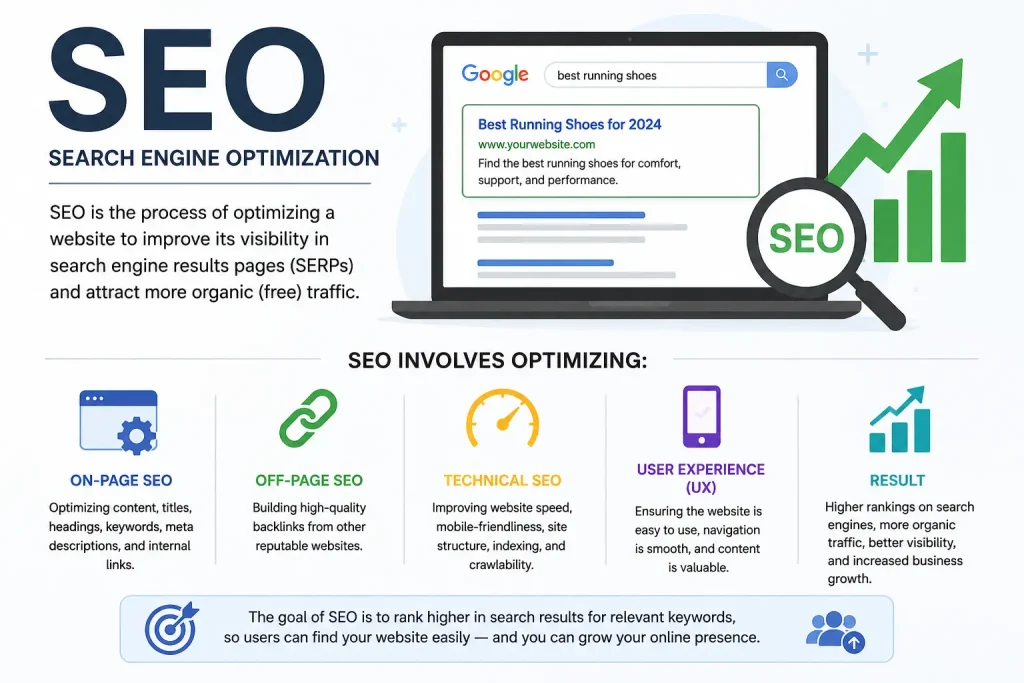
SEO (Search Engine Optimization) is the process of improving your website so that it ranks higher on search engines like Google, DuckDuckGo, Bing and yahoo. and get more organic and free traffic. someone searches something online, search engine optimization SEO helps your website appear in the search results.
Why is SEO Important?
Search Engine Optimization is extremely important for increasing website organic traffic. Increasing brand visibility, and building credibility, the top organic result on Google receives a roughly click through.
This SEO Guide for Beginners explains how SEO helps websites attract free and targeted traffic from search engines by optimizing website content and structure, businesses gain a competitive edge, achieve higher conversion rates and enjoy cost effective long term growth compared to paid advertising.
Some reasons why SEO is necessary
- Increases website traffic
- Generates leads and sales
- Improves visibility on Google
- Builds trust and credibility
- Provides long-term results
Unlike paid advertising, SEO provides consistent traffic without any ongoing advertising costs.
SEO content strategy
SEO content strategy is an important part of ranking a website on Google, in this SEO guide for beginners, you should create helpful and user friendly content that answers people questions clearly. SEO tutorial for beginners in simple language. A good content strategy includes keyword research and writing high quality articles and using long tail keywords naturally.
SEO content writing guide for beginners, your content should be easy to read informative and optimized for search engines and Update old content regularly and add internal links to improve rankings, consistent posting helps increase organic traffic and website visibility. This SEO guide for beginners helps you understand how smart content planning can improve search engine rankings and grow your website organically.
How search engine work
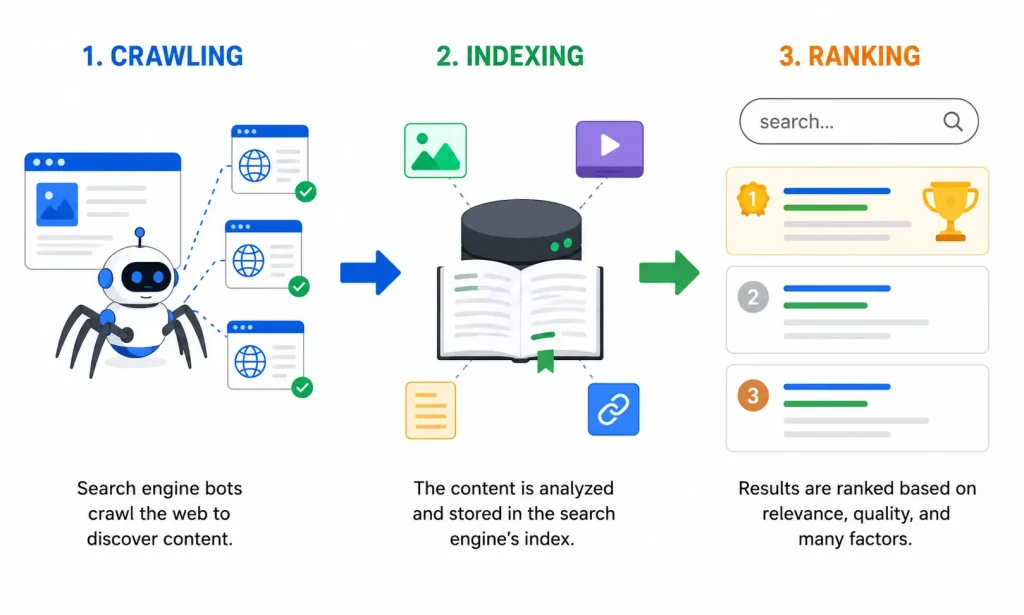
1. Crawling
Search engine bots scan your website Bots read HTML code, analyze content and follow internal and external links to understand site structure.
2. Indexing
Indexing in SEO is the process in which search engines like Google take information from crawled web pages and analyze it and store it in a huge database (index).
3. Ranking
Search engines use hundreds of factors to rank pages and including relevant keywords, high-quality content, backlink authority, page speed and mobile friendliness.
Types of SEO
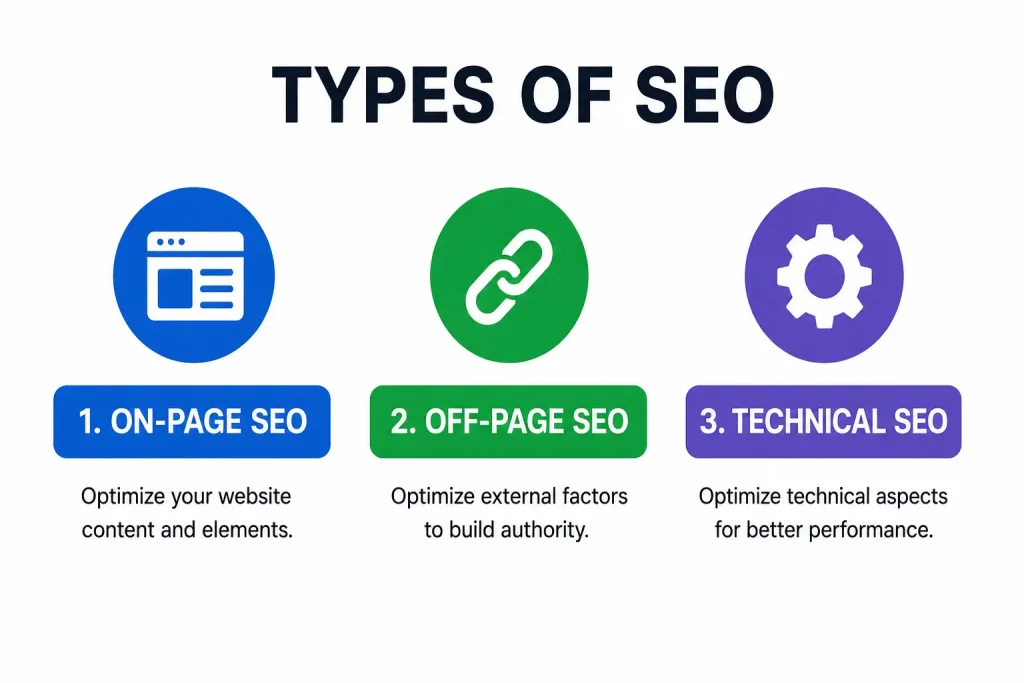
On-page SEO
Title Tag
SEO Guide for Beginner How to Rank Your website
Meta Description
1-2 sentences make a with your focus keyword that make people improve click.
Headers
Use H1, H2 and H3 to content heading
Images
Compress them and add descriptive alt text
Off-Page SEO
Backlinks
Links coming to your website from other websites, google considers your site trustworthy so it appears higher in searches.
Social media shearing
A specially designed visual a photo, graphic or thumbnail that appears alongside a link when it is shared on social media platforms like facebook, linked and x (Twitter)
Guest posting
Guest posting (or guest blogging) is the practice of writing and publishing an article on someone else website or blog SEO provides long-term organic traffic, while paid ads stop when your budget ends.
Technical SEO
Technical SEO focuse on
- Fast website loading
- Mobile-friendly design
- HTTPS security
- Fixing broken links
- XML sitemap
- Crawl error checking using Google Search Console
Step by Step SEO Guide for Beginners
Step 1: Keyword Research
Keyword research is the foundation of SEO. It is helps you figure out what people might be searching for on your blog.
Tips
- Choose low competition keywords
- Focus on long-tail keywords
- Use LSI keywords naturally.
Example of Keyword Research
Suppose your topic is Digital Marketing Guide for Beginner.
Primary Keyword:
Long-Tail Keywords
- Digital marketing for beginner
- Learn digital marketing step by step
- Best digital marketing tips
Step 2 — Optimize Your Content (On-Page SEO)
Use your focus keywords properly example SEO guide for beginner its your focus keyword
- Include keyword in title
- Use in first 100 words focus keyword
- Add in headings (H2, H3)
- Use naturally throughout content
Avoid keyword stuffing
Step 3 — Write High Quality Content
Content is the king in SEO and Solve user problems and Answer questions clearly.
Your content should be
- Helpful to user
- Easy to read your content for SEO guide for beginners
- Informative
- Unique
Pro SEO Writing Tips
- Write short paragraphs
- Use bullet points
- Add examples
- Answer user questions clearly
- Use simple language
- Add FAQs
Step 4 — Use Proper Headings Structure
SEO heading tags H1 and H2 structure content for readability and help search engines understanding the page sequence.
- H1 — Main Title
- H2 — Main sections
- H3 — Sub-sections
Step 5 —Internal Linking
Internal links connect one page of a website to another page of the same website and the simplest example is a hyperlink in a blog post that direct readers to a related service or product page, such as an article on SEO guide for beginner linking to a on–page seo page.
It improves user experience (UX) by guiding visitors to related contents and increasing user time on site and reducing bounce rate.
Step 6 — Optimize Images
Images also help a user optimization and image help blog reading and optimize SEO
- Use alt text (SEO guide for beginners.jpg)
- Compress images
- Use proper file names
Best Image File Name Example
This is a mistake file name IMG1234,jpg
This is right wey seo-guide-for-beginners.jpg
Step 7 — Improve Website Speed
The improving website speed is essential for user experience and SEO with key actions including optimizing images, enabling caching, removing Unnecessary Plugins and using faster hosting and compressing images because a slow website hurts rankings.
Step 8 — Mobile Optimization
Make sure your website is mobile friendly as most people use mobile browsers.
- Responsive
- Fast on mobile
- Easy to navigate
Step 9 — Build Backlinks (Off-Page SEO)
The process of acquiring external links to your site to boost credibility and search rankings with a focus on quality. Effective strategies include creating valuable and linkable content and do not post backlinks of your opponent and otherwise your ranking may decrease.
Step 10 — Use SEO Guide For Beginner Friendly Tools
For beginners, the best SEO tools are often free user-friendly and provided directly by Google to monitor site health and performance. I personally use Rank Math this is a best tools SEO optimization For SEO Guide For Beginner Essential free tools include.
- Google Search Console
- Google Analytics
- Ubersuggest
- SEMrush
- Rank Math
FAQs
1. What is SEO?
SEO is the process of optimizing a website to rank higher on google search engine.
2. Is SEO difficult for beginners?
No beginners can learn SEO step-by-step with practice.
3. Is SEO better than paid ads?
SEO provides long term organic traffic and while paid ads stop when your budget ends.
4. Common SEO Mistakes to Avoid
Many beginners make simple SEO mistakes that can hurt website rankings and traffic in this section of the SEO guide for beginners.
- Keyword stuffing
- Duplicate content
- Ignoring mobile users
- Not using meta tags
- Slow website speed
- Missing alt tags
- Internal linking
Conclusion
SEO is not a one-time trick but a long-term investment in your website visibility and credibility. It is the process of making your site easy for search engines to understand and helpful for users to navigate and which brings free and organic traffic. Create useful original content that answers the specific questions your audience is asking. This SEO guide for beginners has covered everything you need to start Keyword research On-page SEO and Off-page SEO and Technical SEO